Sarah Barrett: Columnist (UK)
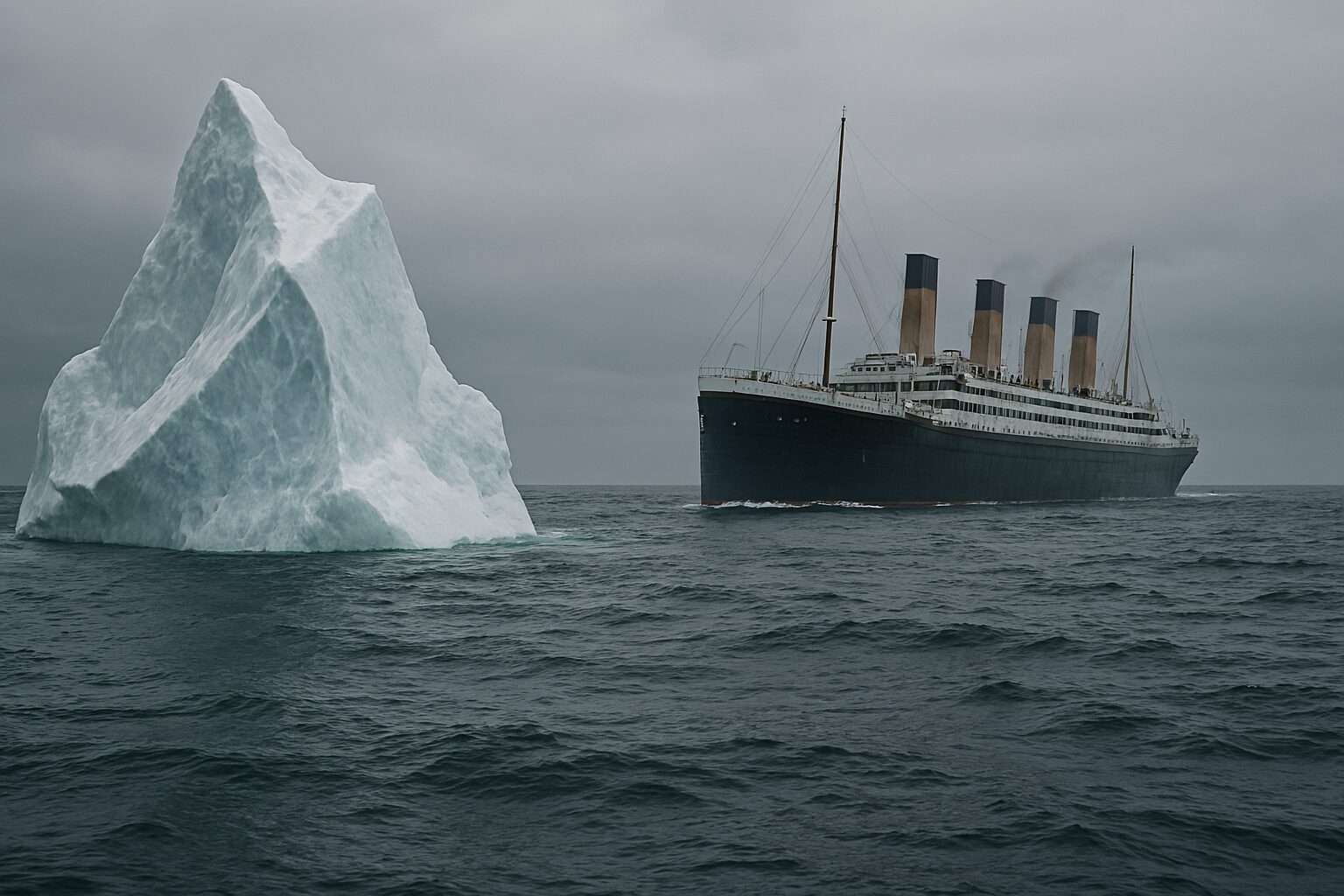
“Women and children first.” That was the cry that went out as it became sickeningly obvious to all that the great ship Titanic would sink, and take countless innocent lives with her. Women were herded into the lifeboats and separated from their husbands, who bravely gave their lives so that their wives, mothers and daughters might live. It was a scene of devastation, yes, but also a scene of gallantry.
Or so the story goes.
Many women of the era hated that they were placed at the same level as children when the chips were down, and were not allowed the same option to give their life for a spouse.
In the aftermath of the disaster, many questions were raised about a woman’s place in society and the choices that were open to her.
If she had privilege over men on a sinking ship with too few lifeboats, why then should men grant her that other great privilege – that of voting?
The Titanic was the iceberg that almost sank the suffragette movement. Men who opposed women’s rights used the tragedy as a weapon to attack the women who demanded the vote. How dare they seek the same rights as men, went the discourse, when men had just died to save them? “The women did not ask for the sacrifice but it was made. Those women who go about shrieking for their ‘rights’ want something very different,” said the famous Reverend Dr Leighton Parks.
There was an outpouring of condemnation for suffragettes in the newspapers of the day, the social media of its time. One Clark McAdams of the St. Louis Post-Dispatch penned this jaunty taunt:
“Votes for women!”
Was the cry
Reaching upwards
To the sky
Crashing glass
And flashing eye-
“Votes for women!”
Was the cry.
“Boats for women!”
Was the cry.
When the brave
Were come to die.
When the end
Was drawing nigh
“Boats for women!”
Was the cry.

A woman in 1912 could have a boat or a vote, but not both. To be fair, a man on board the floundering Titanic might willingly have traded his vote for a space on the lifeboat, but up until that point he most likely would have lived his life with choices and privileges that a woman could only dream of. In the ‘10s a woman not only couldn’t vote, she couldn’t open a solo bank account, she had little recourse if she was abused, she could not serve on a jury, she was strictly forbidden to have an abortion, and she couldn’t even wear trousers in public if she wished to.
She was simply of lesser standing than a man, and when she tried to fight back, she was mocked and abused. Many anti-suffragette cartoons of the time were archived and are available to view in the modern day. They depict suffragettes as shrill, annoying, and (crucially) ugly, unloved women. “At the suffragette meetings you can hear some plain things – and see them too!” quipped one. “At 40 not married yet! At 50 a suffragette,” declared another.
Others placed women, again, at the same level as children. One cartoon of the era imagines that if women were granted the vote, giving it to infants would be the next step. “Now I’m mummy and daddy’s equal!” a little girl declares as she goes to vote.
But it wasn’t just men who were anti-suffragette. Plenty of women were outraged by the idea that they might be given the vote. They didn’t want to be equal to men, they wanted to be protected by them, and they deeply admired the brave men of the Titanic who made the ultimate sacrifice for their women. A lady called Mrs John Martin – her actual name, as opposed to that of her husband, appears to be lost to history – of the League for the Civic Education of Women wrote that “we are willing to let men die for us, but not to vote for us.” Prominent ladies of the day and First Lady Nellie Taft raised money for a statue to be erected to “male chivalry” in Washington D.C, and it remains there to this day. On the back it reads, “To the young and the old, the rich and the poor, the ignorant and the learned, all who gave their lives nobly to save women and children.”






Unfortunately, not all children were saved. 53 children died on the Titanic, the vast majority of them from third class. And it is a bleak fact that “children” were defined differently back then. Boys of 13-17 were considered adults, not children, and were barred from the lifeboats. George Frederick Sweet, almost 15, was one of these. An even younger child, 13-year-old John Ryerson, would have perished on the ship if his father hadn’t begged for him to be allowed in a lifeboat. And an 11-year-old, William Carter II, allegedly had to be hastily disguised as a girl by his mother, who feared he would not be saved.
Which leads us to the terrifying truth that many mothers discovered on that freezing, pitch-black night in 1912. It was a woman’s place to raise children, but if those children were male, it was their place to die for their mother. How many mothers aboard the Titanic were ripped from their boys? What woman would not rebel against a system that churned up children in that way, that thought it was good and right for a mother to have the spot on a lifeboat she wished to give to her 13-year-old son?
Some feminists were furious that more women on the Titanic didn’t rebel and die. Women’s rights campaigner Emma Goldman wrote a scathing article for the Denver Post where she declared, “With all the claims the present-day woman makes for her equality with man, her great intellectual and emancipatory achievements, she continues to be as weak and dependent, as ready to accept man’s tribute in time of safety and his sacrifice in time of danger, as if she were still in her baby age.”
She added, “It is to be hoped that some there were among the steerage victims at least, who preferred death with those they loved to life at the expense of the loved ones.” There were: Ida Straus, who chose to remain with her husband, is the most famous example of them.
Another suffragette, Lida Strokes Adams, said, “I think the women should have insisted that the boats be filled with an equal number of men and women, or that even the men should have had an equal chance of saving themselves, even if in brute strength they are stronger. It would have been a wonderful thing for suffrage if this had been done.” But what woman on board the Titanic, surrounded by ice and panic, was in a position to insist?
Of course, the world changed, and women got the vote in the end. Yet sexism still exists across all continents, creeds and religions, and with the rise of the Internet, it’s become easier for these ideas to spread. Many, many men still seek to diminish the rights of women in the name of “protecting” them – or sometimes just hating them. In the runup to the 2016 American elections, #repealthe19th trended on Twitter. This year, after the murder of Renee Good at the hands of ICE in Minnesota, influential comedy writer Graham Linehan reposted a message calling for American women to lose their right to vote. In these uncertain times, women are afraid.
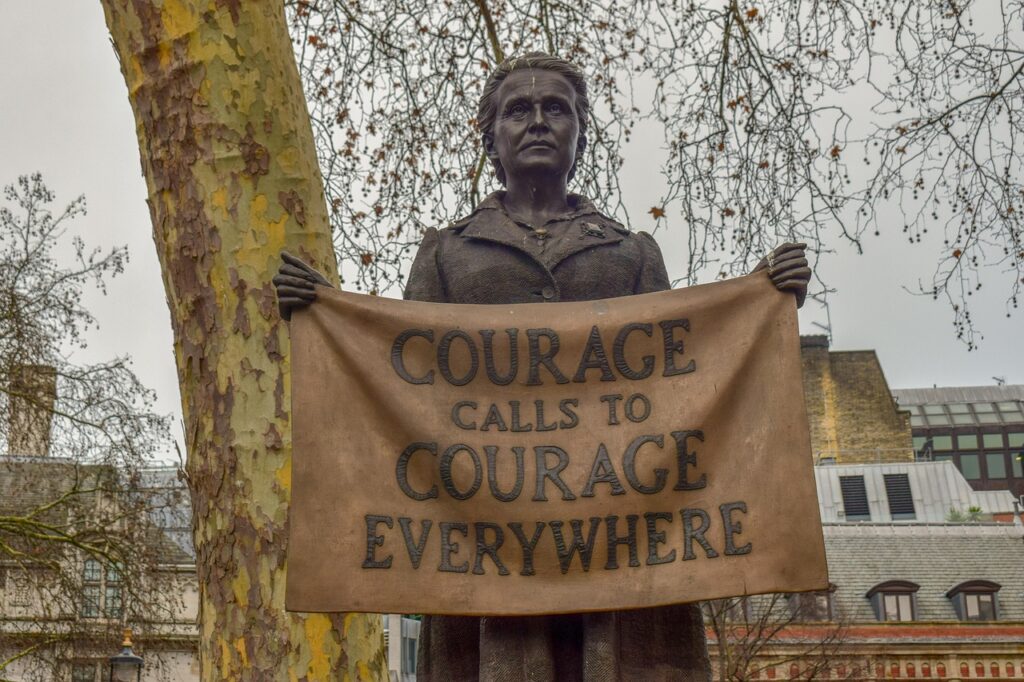
So perhaps it’s only fitting that the last word should go to a woman. When famous suffragette Harriot Stanton Blanch was asked what women would have done if the positions of males and females aboard Titanic were reversed, she answered, “We should have laws requiring plenty of lifeboats.”
Supporting young & beginners
Want to give this writer some extra encouragement?
Support a writer breaking out into the literary industries by donating. 50% of the donation goes to the writer, whilst the other half is used to build and develop the Magazine, providing even more opportunities for people.
© 2026 Houghton & Mackay. All Rights Reserved. The content in this publication may not be reproduced in any form without prior permission to the rights owners. Learn more about Houghton & Mackay on the main Business Website.