By Karyn Farrell: Travel Correspondent
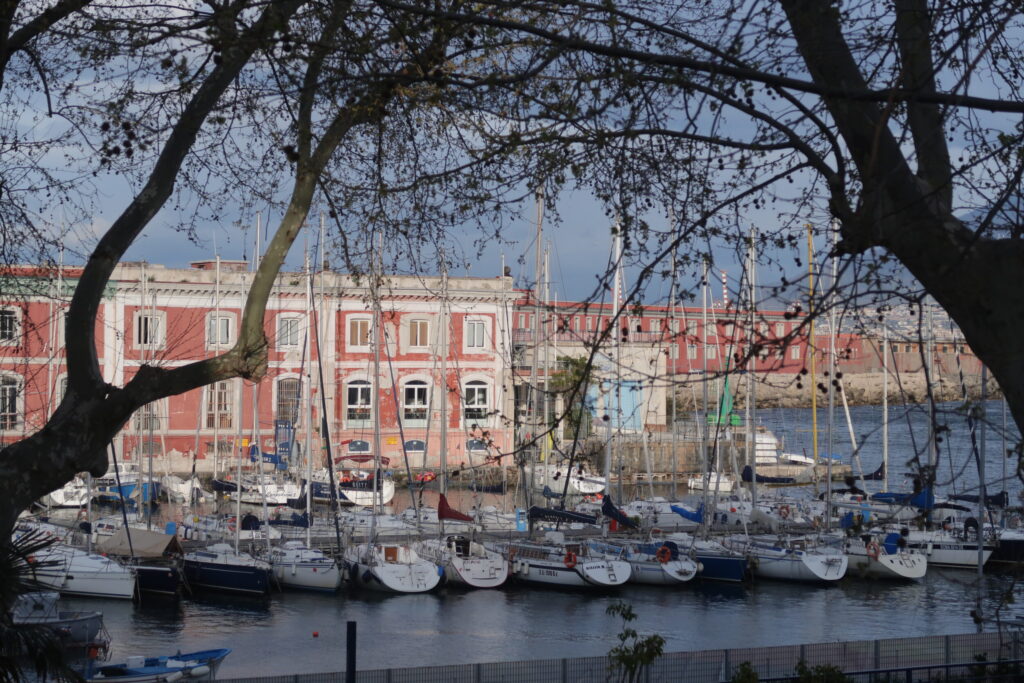
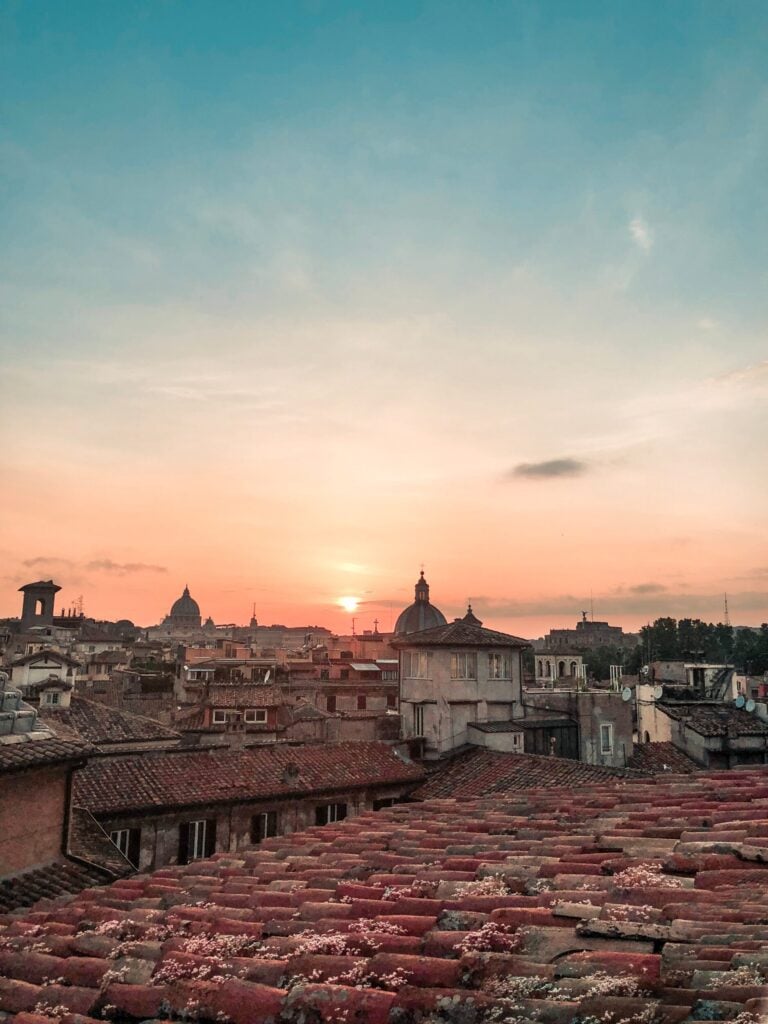
Naples is an outlier. An Italian city like no other. Colourful and chaotic, confident in its brash energy and swagger. A city of impossibly narrow streets, bustling with life from every corner. It’s noisy as hell, and unapologetically so. Motorbikes zip past at great speed, and honking horns are more often a signal of intention than an expression of aggression.
Unlike Rome or Venice, its initial appeal may not be immediately obvious but perseverance and patience are rewarded. One of the oldest cities in the western world, Naples has a rich history dating back to its foundation by the Greeks in the 8th century BC.
Fewer than two hundred years ago, it was also one of the most important cities in Europe: a favourite stop for visitors on their Grand Tour, lured by the art, architecture and showstopping coastal location.
These days, Naples is a city that still punches far above its weight on a cultural level. Countless beautiful churches and palazzi dot the city, it’s home to one of the most iconic pieces of sculpture in Europe, no less than three paintings by Caravaggio, and there are numerous outstanding museums and galleries in which to spend your days.
It has long been dogged with a reputation for being somewhat ‘unsafe’ for tourists. Its historical associations with organised crime are impossible to escape but is this still deserved in 2026?

I exist only because inside of me and above all else I am only and above all a Neapolitan.” —
For context, things started to go downhill for Naples after the reunification of Italy in 1861. Its wealth disappeared into a centralised exchequer, disproportionately benefitting the north of the country. Over time the local economy collapsed, its poverty creating the prime conditions for the corruption and widespread criminality which was to follow. As recently as fifteen years ago, the presence of The Camorra loomed large over the city. But thanks to the efforts of a renegade mayor and his anti-corruption stance, and the rise of community and cultural initiatives, Naples is fighting back, reclaiming its image as one of the great European cities. While parts are still rundown, and with a certain ‘vibe’ to some of the neighbourhoods, these days it feels cleaner, brighter and revitalised, while never losing its authentic character.
The arts have had a huge role to play in its transformation. There has been a particular surge in the appreciation of contemporary art with sites like Madre and the fantastic Jago Museum. The latter showcases the work of Jacopo Cardillo, AKA Jago, a remarkable young Italian sculptor who works with marble in the classical style while adopting a contemporary approach. His subject matter is unquestionably political, addressing issues such as racism, misogyny and societal inequality.
The Jago Museum opened in 2023 in the Church of Sant’ Aspreno ai Crociferi, a magnificent 17th century building in the heart of the Rione Sanità. While this district was once crime-ridden and dangerous, a no-go part of Naples, today it’s a fine example of urban regeneration. Led by grassroots community cooperatives such as La Cooperativa La Sorte, efforts have been made to revitalize neglected heritage sites and churches while simultaneously upskilling local young people for careers in the art and tourism sectors.
These days, Rione Sanità is still colourful and noisy, its narrow streets lined with markets selling food, clothing and knick-knacks. On Via Montesilvano we find Vicolo della Cultura, Italy’s first Alley of Culture, an initiative which has transformed areas formerly influenced by organised crime into open-air libraries, street art galleries and hubs for reading. Booths have been installed and books donated by writers and local companies, while the backdrop is a series of murals inspired by scenes from Neapolitan life and popular culture. The presence of the museum and these cultural initiatives have gone some way to altering perspectives of this neighbourhood and reclaiming its reputation in the fight against organised crime. However, there is still some resistance to mass gentrification from the local population. Striking a fine balance will be necessary.
The Jago Museum is undoubtedly the highlight of this neighbourhood. A staggering selection of sculpture showcases the artist’s mastery, capturing the deepest of human emotions and vulnerabilities in stone. In his interpretation of the Pietà, he references a photograph taken by photojournalist Manu Brabo during the Syrian war. A father holds the lifeless body of his child, his face a mask of grief and loss. It’s a heartbreaking scene, full of emotion and utter devastation.
Arguably the artist’s most famous piece is Figlio Velato: the Veiled Son. You won’t find this in the Jago Museum but in a small innocuous chapel a short walk away. A child’s body is laid out on a marble slab in the centre of the church. Illuminated from above, all of the contours of his tiny body are visible through a transparent veil that covers him from head to toe. It’s a devastating commentary on the suffering of innocents, and the consequences of contemporary political decisions-making.
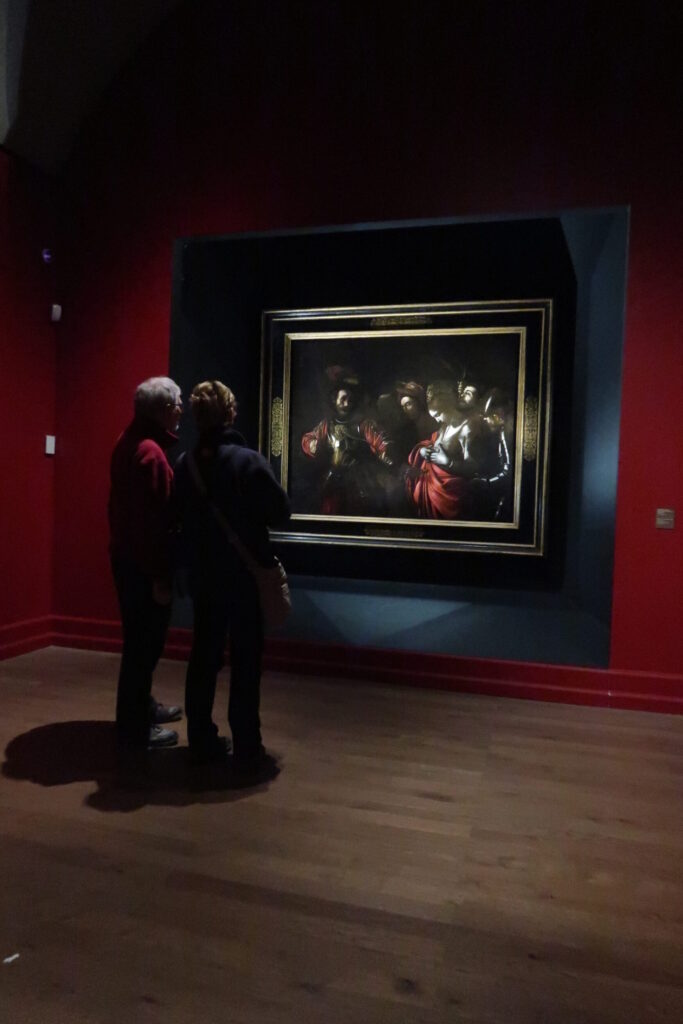
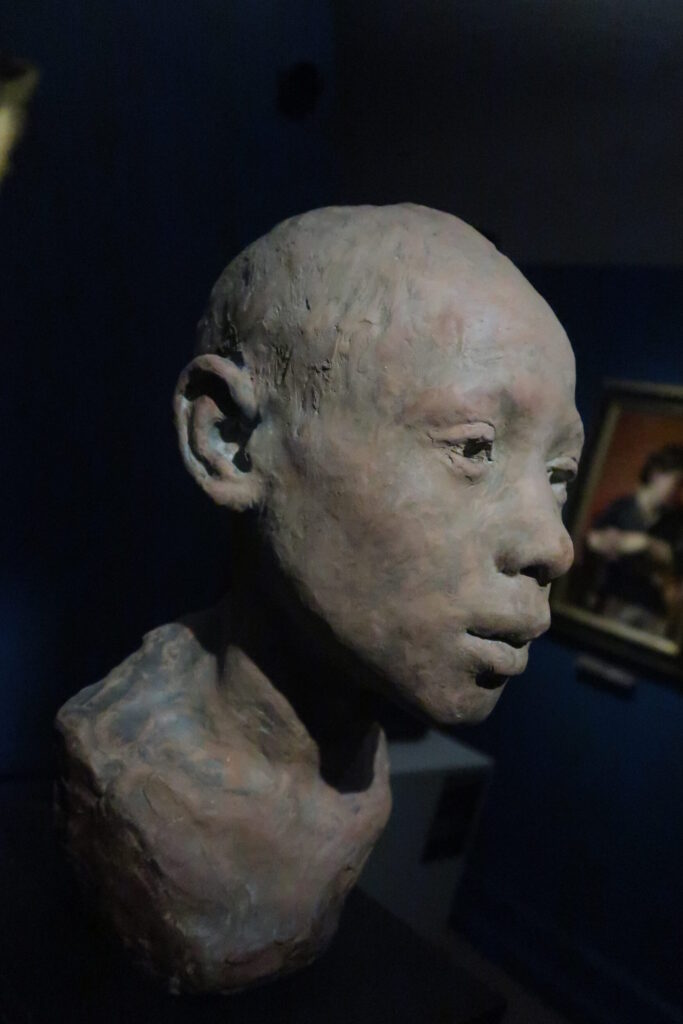
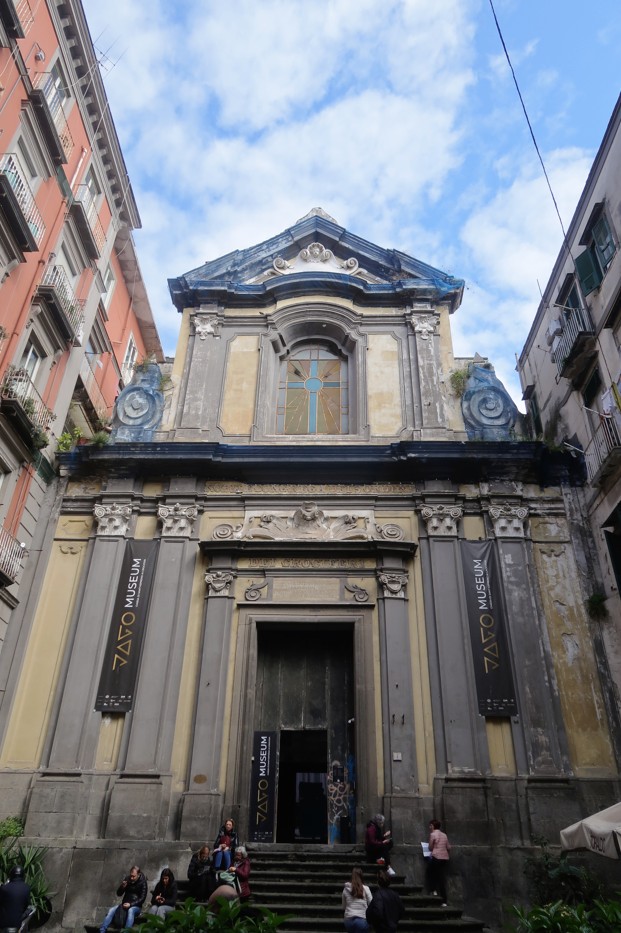
Caravaggio Galerie d’Italia, Naples, Vincenzo Gemito, Jago Museum Entrance. Photography: Karyn Farrell
Jago views Naples, his adopted city, as “a city that doesn’t need tourists but lovers.
Naples’ Modern Temple of Living Marble, art and history
In Naples, where elegance rises from ancient stone, Jago’s museum stands as a serene sanctuary of sculpture, a place where the city’s restless soul is distilled into pure, contemplative beauty.
In this piece Jago pays homage to one of Naples’s most significant artworks: the iconic Veiled Christ by Giuseppe Sanmartino at Sansevero Chapel. Dating to 1753, it showcases a virtuosity in marble as never seen before and is, unsurprisingly, one of the most popular sites in the city.
The figure of Christ lies in repose at the heart of the small chapel. His head rests on two pillows while his body appears to sink into the bed below. In death, his face is still and peaceful. A sheer veil covers his face and drapes his torso.
Through the thin material the contours of his body are exposed, the holes in his hand bearing testament to his recent suffering. The piece was carved from a single block of stone.Visitors should take time to note the other remarkable works of art dotted around the chapel. In the mid-18th century, the visionary Raimondo di Sangro, Prince of Sansevero, commissioned some of the most illustrious artists of the day to contribute to his family chapel. Of note is the veiled figure of Modesty by Antonio Corradini to the left of the altar, and the jaw-dropping Disillusion by Francesco Queirolo to the right, draped in a fine net that was also carved from marble.

Naples is home to three extraordinary paintings by the Baroque master Caravaggio. Both revered and reviled, this controversial character is considered one of the greatest artists of all time.
His stark and unflinching realism, his complete disregard for the rules of Classical convention, his cinematic ability to capture a moment of drama in time, and his complete mastery of light and shade has inspired thousands of artists to this day.
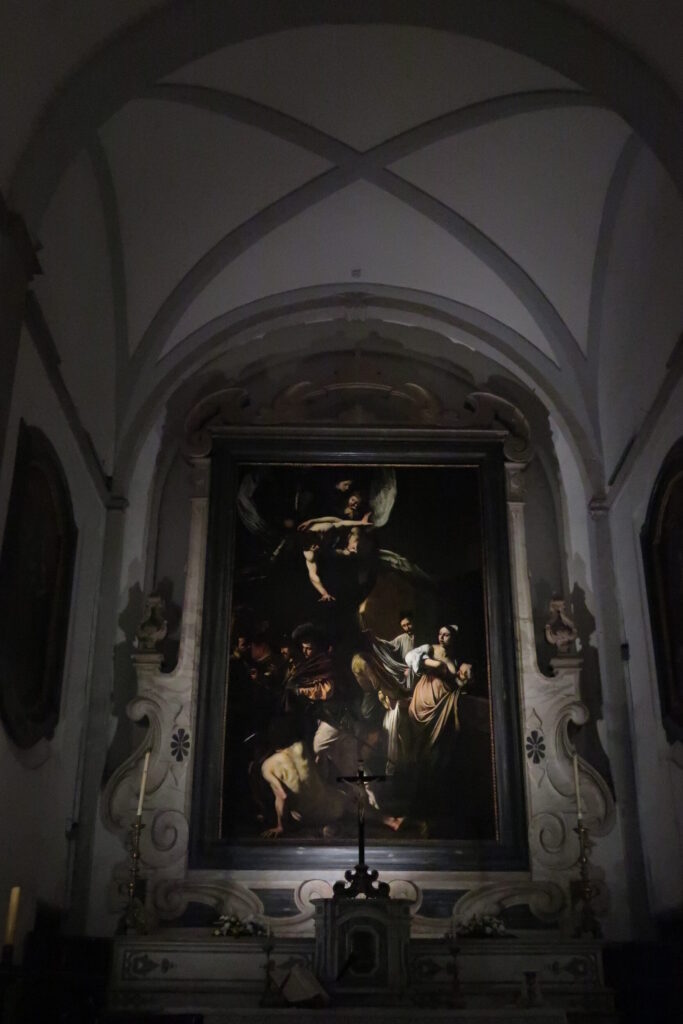
It’s always an experience to see a Caravaggio in real life. To see three in one city is a privilege. Pio Monte della Misericordia is a magnificent 17th century palazzo and church which houses the artist’s monumental Seven Works of Mercy.
The painting occupies the space for which it was originally commissioned and is an absolute tour-de force, both in terms of composition and subject matter.
Naples is the only city where beauty refuses to sit still — it moves, argues, dazzles, and somehow wins every time
Museo di Capodimonte is located on a hill to the north of the city, surrounded by acres of lush greenery and woodland. With a vast and impressive collection including works by Titian, Botticelli and Raphael, it’s the Caravaggio that is the biggest draw for visitors. Brutal in its realism, the suffering and resigned acceptance of the central figure is illuminated sharply, while his aggressors emerge from the darkness. The three figures occupy the full picture plane, bringing us, as viewers, into the heart of the action.
The Martyrdom of Saint Ursula isthe last painting ever completed by the artist before his death in 1610. Given pride of place on a feature wall in a darkened room in the Galerie d’Italia, it’s got all the trademark Caravaggesque features we’ve come to expect: the closely cropped composition bringing us closer to the action, the dramatic, almost cinematic lighting, and the unmistakable face of the artist himself as one of the onlookers to the saint’s murder.
The Caravaggio is not the only reason to visit the Galerie d’Italia. Located in the former Banco di Napoli, It’s a wonderful museum on one of the city’s main thoroughfares. The 1940s building itself is striking in its pared-back detailing: a grey stone and marble façade with grand arches and large windows, filling the space with light. Fans of Neapolitan filmmaker Paolo Sorrentino may recognise the building from his 2021 masterpiece The Hand of God. It’s the workplace of the protagonist’s father, played by veteran actor Toni Servillo.
The art collection is astoundingly good with works from the early 17th to the early 20th century including Luca Giordano, Artemisia Gentileschi and of course, Caravaggio. A particular highlight is the work of Vincenzo Gemito: a 19th century Neapolitan master sculptor and draughtsman. A gallery of his work includes a series of children’s heads in terracotta and bronze, beautifully illuminated to showcase his exquisite attention to detail.
Naples is a city that is filled with art, and not just in museums and galleries. The Metro Art Napoli project has transformed the subterranean spaces into one vast public art exhibition space. The Art Stations of Line 1 and 6 showcase more than 300 site-specific works of contemporary art, including contributions by renowned artists like Mimmo Paladino. The Toledo station is unmissable with a cylindrical opening to the sky, its turquoise and blue mosaics evoking the sensation of descending below the sea.
It seems Naples’ star is firmly on the rise once more, slowly shaking off the shackles of its not-so-salubrious past and embracing an era of transformation, both societal and cultural. The arts have had a significant role to play in reframing this narrative.
Did you enjoy this article, please don’t forget to give the author a vote below via the stars. All writer receive a bonus for 100 or more votes. Read Karyn’s other articles via her profile.
Follow this Magazine on Mastodon or the Fediverse to receive updates directly in your feed.

Fediverse Followers
© 2025 Houghton & Mackay. All Rights Reserved. The content in this publication may not be reproduced in any form without prior permission to the rights owners. Learn more about Houghton & Mackay on the main Business Website. Photography and prose courtesy of Karyn Farrell