By Karyn Farrell: Travel Correspondent (UK)
Imagine the luxury of having the Sistine Chapel all to yourself. Of standing uninterrupted in front of Botticelli’s Birth of Venus. Or strolling through the Uffizi without the distraction of clicking cameras and phones. Anyone who has braved Rome, Florence or Venice at the height of summer will be familiar with that conveyor-belt sensation of moving en-masse. Of ticking off the great sights without ever having the opportunity to fully engage. While these Italian hotspots are undeniably some of the greatest cities in the world, they are becoming increasingly oversaturated with tourists, an understandable source of frustration to its residents.
Choosing a smaller city, particularly at peak times, reaps multiple benefits. In the north of Italy, a golden triangle of former city states, Parma, Mantua and Ferrara, are enticing alternatives for the curious and discerning traveller. A treasure trove of art and architecture awaits.
Let’s take Parma, for example, one of the unsung heroes of northern Italy. Located in the Emilia-Romagna region, halfway between Bologna and Milan, this university city feels like one of Italy’s best-kept secrets: stately and elegant but never showy.
While internationally renowned for its contributions to Italian cuisine, namely Parmigiano Reggiano and Prosciutto di Parma, it also boasts architectural and artistic masterpieces to rival its more famous counterparts.
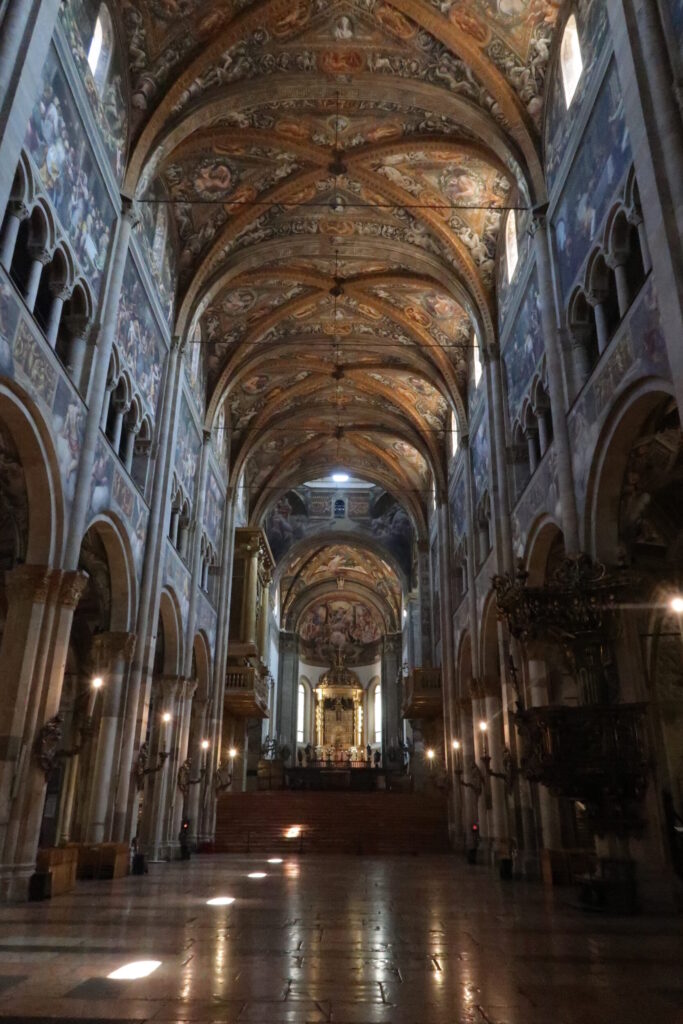
Parma became the adopted home of Correggio, one of the great masters of the High Renaissance. In Parma Cathedral, we find one of his greatest gifts to the city: a series of illusionistic ceiling frescoes to rival the Sistine Chapel. Directly above the altar is the heart of the action, Correggio’s masterful dome, a mass of swirling drama and pictorial illusion. Painted figures appear to stand in three-dimensional form on the ledge while others sit perched with their legs dangling over into our space.
At the centre of it all is the Virgin Mary, surrounded by circles of clouds crammed with angels and saints as she ascends towards the golden light of heaven above. But in contrast to Michelangelo’s masterpiece, this one is free to visit, and you won’t have to vie for space with other tourists, or to dodge a selfie-stick.
Continued below…
Next door to the cathedral is the extraordinary Baptistery, a striking octagonal structure in pink Verona marble. Built between 1196 and 1216 to the designs of Benedetto Antelami, the exterior boasts an elaborate decorative frieze of panels featuring animals, strange beasts and fantastical creatures. Sculptural lunettes above three entrance portals are incredibly detailed, and each tell a different story.
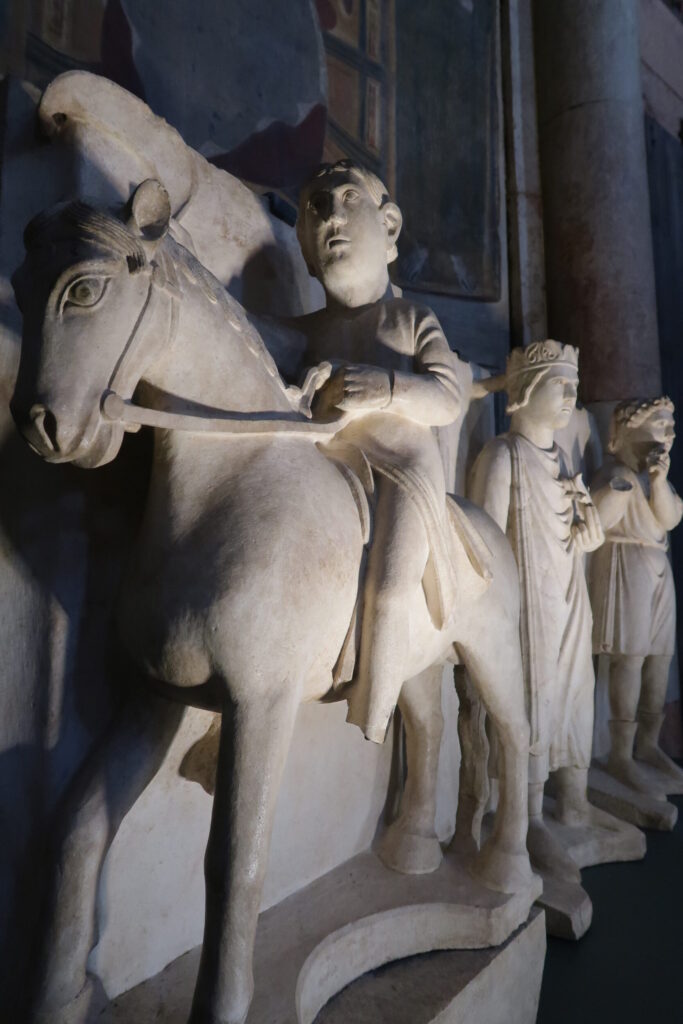
Its interior is particularly striking, covered in 13th century frescoes from floor to ceiling. Stand beneath the dome to admire its unusual umbrella vaulting: between each of the sixteen ribs are friezes of biblical and celestial scenes. But the star of the show is the remarkable series of sculptures by Benedetto Antelami. Beautifully illuminated, the months, seasons and signs of the Zodiac are represented in exquisite detail. Despite their almost modern appearance, this series dates to the late 12th and early 13th century.
Visitors could also easily dedicate an entire day to the Palazzo della Pilotta, a vast and imposing palace complex which houses the National Archaeological Museum, the Palatine Library and Bodoni Museum.
It’s also home to the Galleria Nazionale, Parma’s National Gallery with a world-class collection of art including work by Da Vinci, El Greco, Canaletto and Parma’s own Parmigianino, one of the central figures of Italian Mannerism.
A highlight is the remarkable Teatro Farnese, one of only three Renaissance theatres in existence, and the first example of a modern theatre in the western world. Made entirely from wood and painted plaster, it dates to 1618.
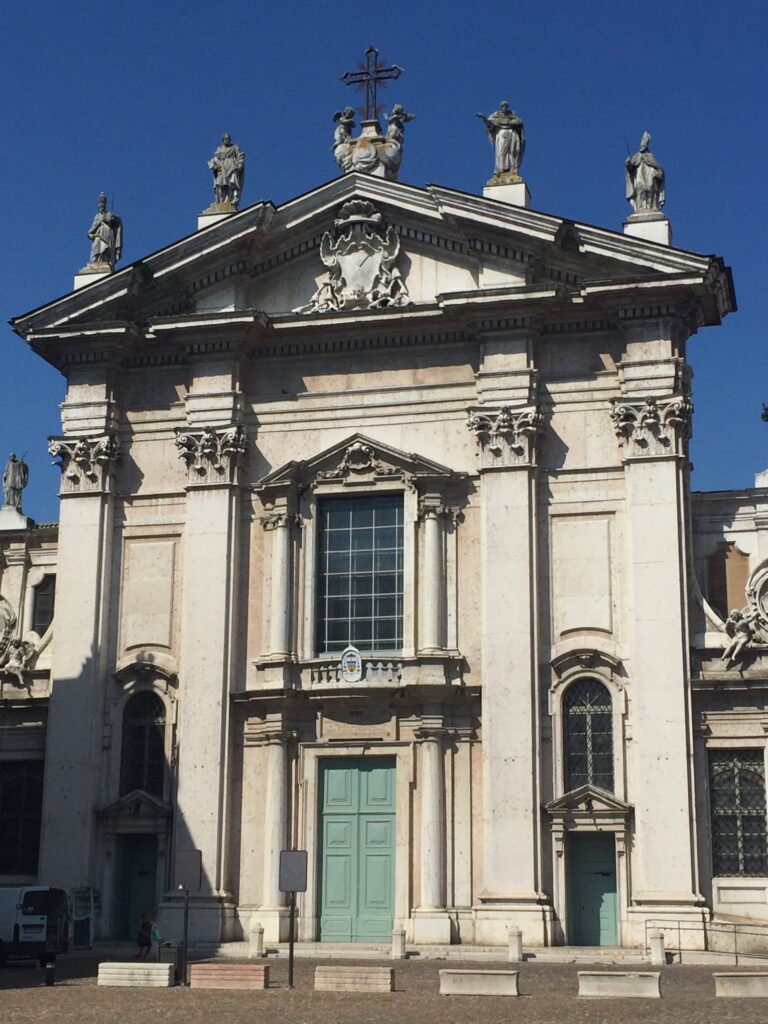
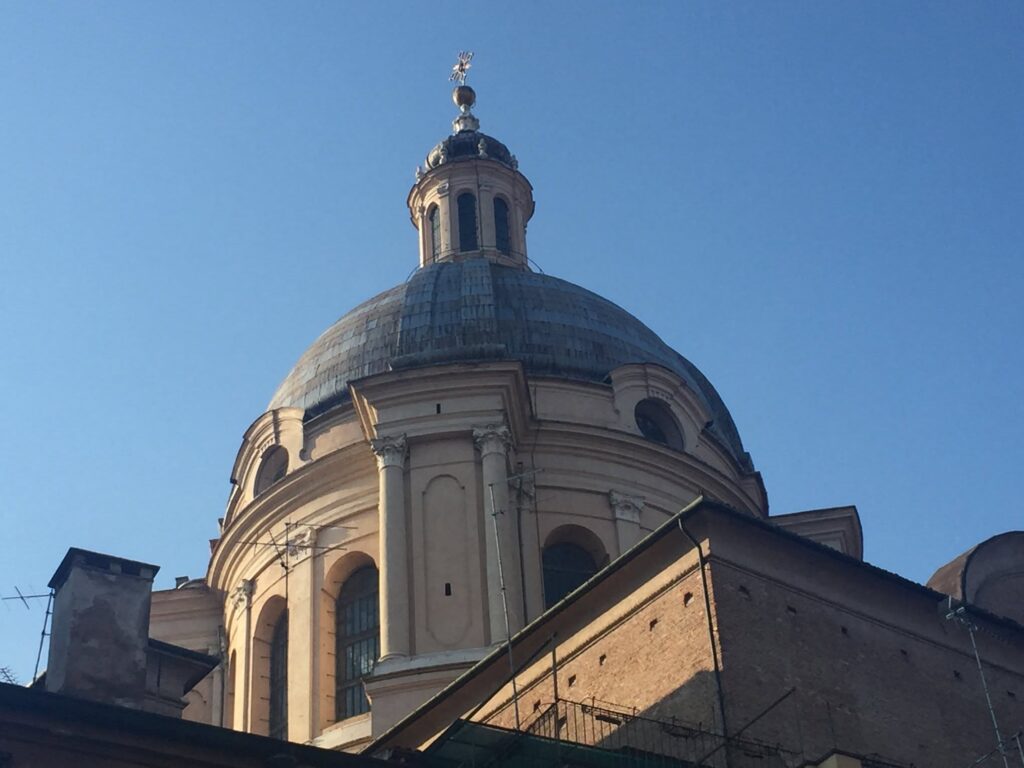
Next up is Mantua, a jewel of the Lombardy region. An extraordinarily beautiful city boasting a wealth of iconic masterpieces, it inexplicably doesn’t feature on the main tourist trail. On approach from the Ponte Legnano, the fortifications of Palazzo Ducale loom into view, perched on the edge of the lake. The dome of the basilica of Sant’ Andrea is visible in the distance, the work of Leon Battista Alberti and one of the greatest examples of Early Renaissance architecture. In the first chapel on the left is the tomb of the painter Andrea Mantegna, who spent the latter part of his life in Mantua.
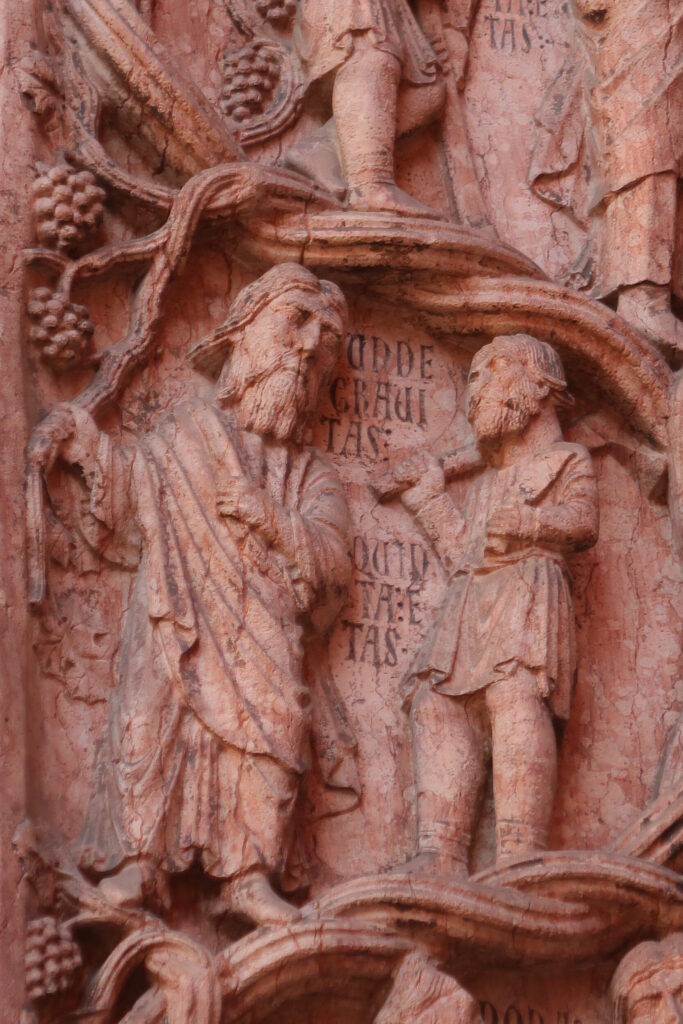
Photo Credits: Karyn Farrell
Northern Italy’s quiet splendour beckons: an odyssey of Renaissance genius, serene piazzas and intimate masterpieces, offering cultured travellers a luxurious escape from overcrowded hotspots and a richer, more authentic Italian experience.
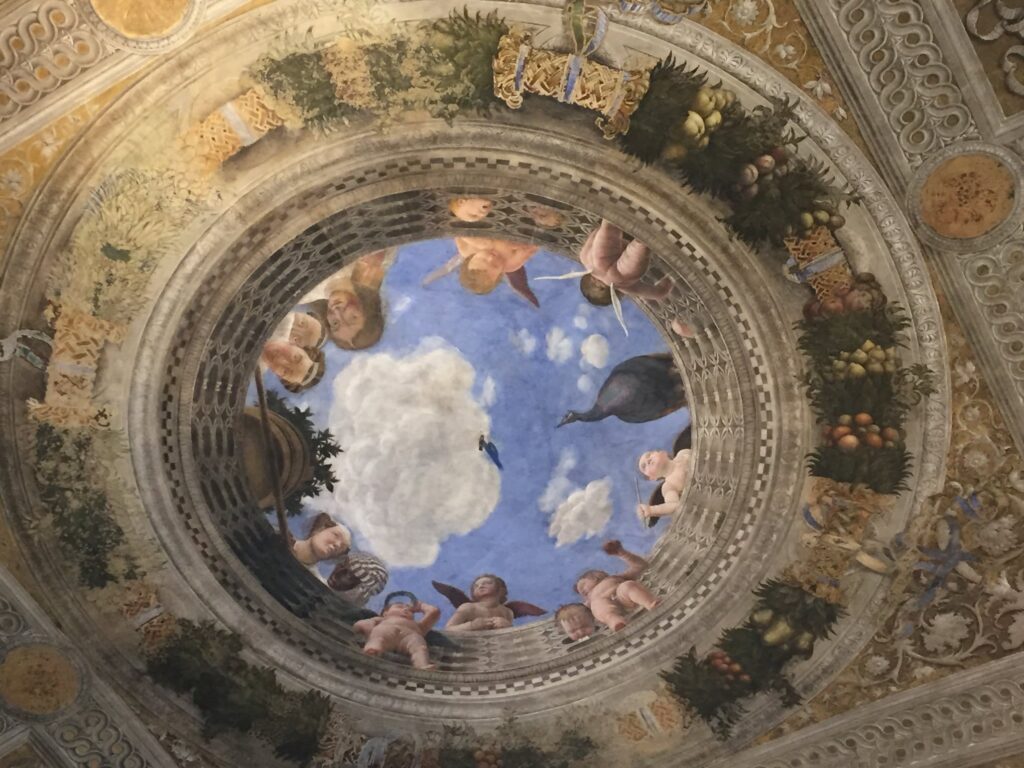
Way ahead of his time in terms of artistic and perspectival experimentation, one of Mantegna’s greatest legacies is the remarkable Camera degli Sposi, the bridal chamber in the Palazzo Ducale. Completed in 1474, the ceiling is a spectacular feat of trompe l’oeil and a precursor to many great examples of illusionistic ceiling painting to follow. Its painted dome and dramatic foreshortened perspective appear to open the room to the sky beyond. The illusion is enhanced by the figures peering over the edge of the dome and the three putti who have escaped and appear to be standing on the ledge over our heads. He goes further by adding a bar across the top of the dome on which a vase of plants is resting precariously, leaving viewers with the unsettling feeling that it could land on their head at any given moment.
But the main reason to visit Mantua is Palazzo Te, a Mannerist Renaissance villa on the outskirts of the city. Designed and executed by artist and architect Giulio Romano from 1525-35, this is unmistakably his greatest masterpiece, commissioned as a place of leisure for Duke Federico II Gonzaga. By leisure, read a place for him to entertain his mistress.
There’s a sharp contrast between the refined and elegant classical symmetry of the exterior, and the wildly elaborate painted murals on the interior. The palace is made up of a series of interconnecting rooms, all highly decorated with individual themes, and this is where his creativity and invention are given full reign. The Hall of the Horses features painted life-sized, almost three-dimensional animals. Some appear as if standing on the lintels of the doors and on the painted cornice that runs around the walls. The line between what is real and what is painted is blurred from a distance.
He reaches his fullest artistic expression in the Sala dei Giganti, the Chamber of the Giants. Frescoes covering every inch of wall and ceiling tell a dramatic story from Ovid’s Metamorphosis of one of the biggest earthquakes in mythology. Visitors are entirely surrounded by enormous figures of giants in scenes of rebellion and retribution. The illusionism employed is extraordinary: there is no distinction between floor and ceiling, and the corners of the rooms appear rounded. Columns tilt forward to nauseating effect, and the painted dome in the ceiling is an absolute tour-de-force, appearing to extend upwards into infinite space while the figures appear to fall from the sky into the room below.
According to art historical tradition, after viewing Correggio’s masterpiece in 1530, Titian warned the cathedral canons that they should take down the work, claiming it was merely a “pot of frogs’ legs”. Whatever our perceptive first impression, it is stunningly beautiful nontheless.
Sala dei Giganti Palazzo Te Mantua. Photography: Karyn Farrell
Ferrara offers a different experience. Built on the banks of the River Po, it has a distinct feel to other Italian cities. Ruled by the Este Dynasty from the 14th to 16th centuries, it was the first place in Italy to introduce urban planning – a reaction against the higgledy-piggledy layouts and labyrinth-like streets of Medieval times. The Renaissance ideals of harmony and order are visible in its architecture and art, and though it’s a university town, it has retained an aura of grandeur and majesty.
The old city walls are remarkably well preserved, enclosing the historic centre in a 9-kilometre circumference. Today, walking and cycling tracks run both alongside and across the walls. Cycling is hugely popular in Ferrara and hiring a bike is recommended – the views of the city from the top of the walls are hard to beat, and the shade of the trees is a welcome reprieve from the summer sun.
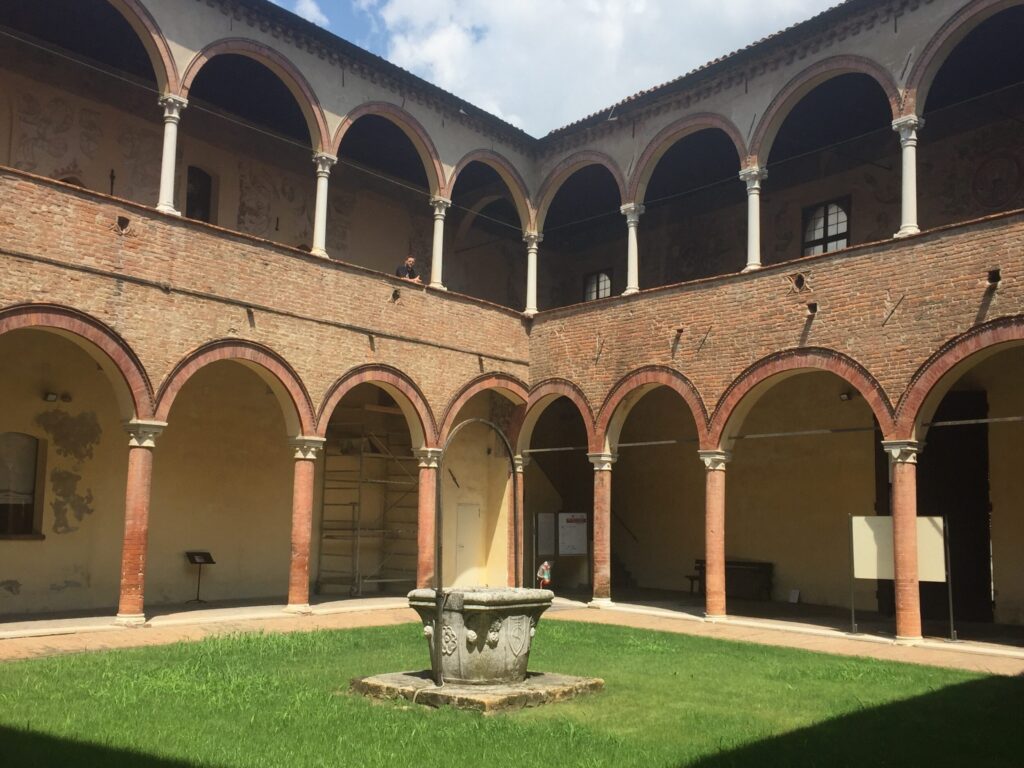
Casa Romei is another highlight, a beautiful 15th century city villa filled with frescoes, paintings and sculpture. It’s a tranquil place in the heart of the city with an internal courtyard surrounded on all sides by Renaissance arches. Throughout the year this museum also hosts contemporary art exhibitions.
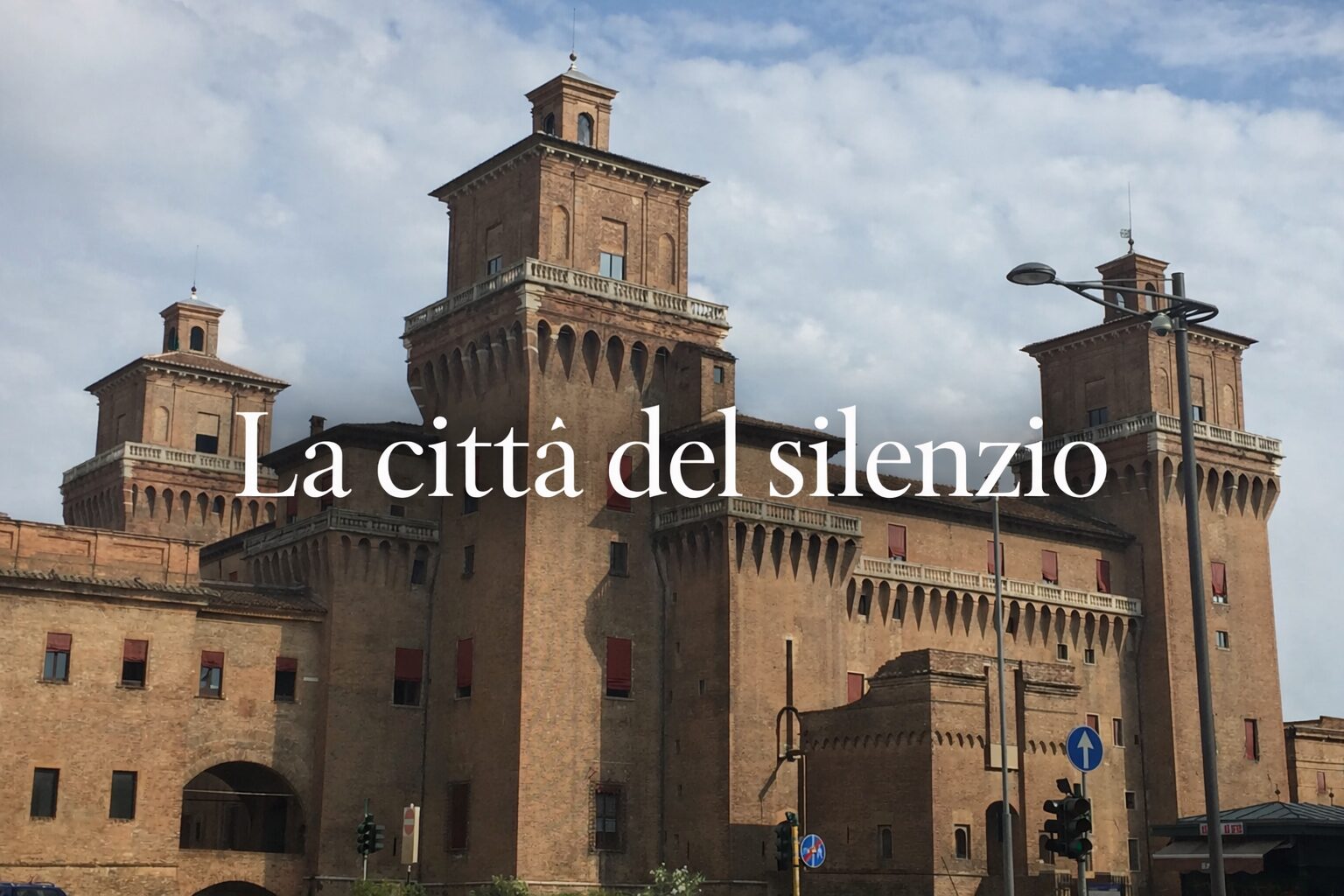
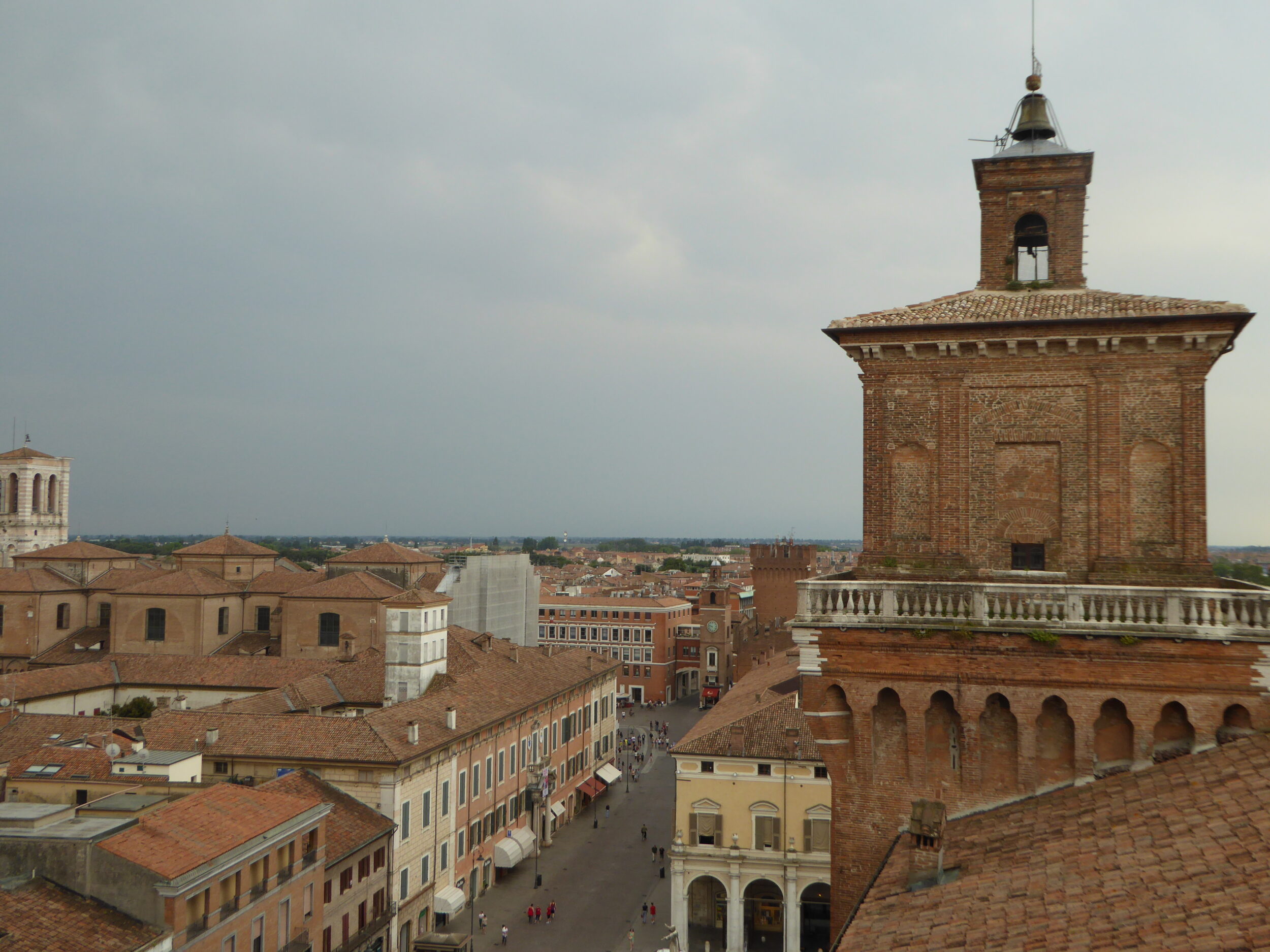
No visit to Ferrara is complete without a visit to Castello Estense, seat of the Este family throughout their reign. This is the iconic image of Ferrara – an imposing medieval castle with four towers surrounded by a moat and presiding over the city. Construction started in 1385 with final additions being added up to the 19th century. Torre dei Leoni offers panoramic views of the city on all sides while the Garden & Loggia of the Oranges is an unexpected surprise – a gorgeous courtyard lined with orange trees.
We all have our part to play in combatting over-tourism. Opting for smaller, secondary cities offers the visitor a more rewarding experience, particularly if your heart is set on Italy as a destination. It allows for spontaneity: of not having to plan activities weeks in advance or joining long tiresome queues for tickets. It opens up the possibility of viewing world-class art in a more intimate setting and facilitates real and uninterrupted engagement. Doesn’t that sound like an attractive alternative?

Supporting young & beginners
Want to give this writer some extra encouragement?
Support a writer breaking out into the literary industries by donating. 50% of the donation goes to the writer, whilst the other half is used to build and develop the Magazine, providing even more opportunities for people.
© 2025 Houghton & Mackay. All Rights Reserved. The content in this publication may not be reproduced in any form without prior permission to the rights owners. Photography courtesy of Karyn Farrell and is copyright. Learn more about Houghton & Mackay on the main Business Website.