How today’s patrons recast artistic influence
Ana Romanelli: Columnist
The idea of a patron is often associated with the grandees of the ancien régime, the industrialists of the Gilded Age, or the discreet families who kept museums solvent through wars, recessions, and the occasional scandal. Their power was slow, ceremonial, and expressed through reassuring cheques, galas, and naming rights. One wrote a letter, waited for a curator to reply, and understood that influence was something polished over generations like good silver. What has emerged in their place is a circle that treats culture not as a citadel but as a network, a fluid terrain in which taste, capital, and identity move at the speed of a notification. They are young, globally literate, and usually unbothered by the old hierarchies. They do not wait for invitations; they send direct messages.
What distinguishes this new patronage is not merely youth but temperament. They are, as the artist Lydia Smith remarks, “more engaged with visiting the studio, hearing from the artist, wanting to come to openings”. The emphasis is on proximity, on the social pleasure of being in the room where the work is made rather than the room where it is later sanctified. The studio visit has become the new salon: informal, intimate, and faintly performative, a place where collectors from finance or tech can feel momentarily absolved of their day jobs by demonstrating curiosity.
The shift is not only behavioural but ideological. As Marina Leganowska, a painter who also manages partner relationships at Art Shield, observes with admirable candour: “They have money but oftentimes a very limited understanding of culture. (…) Tech companies have trained their employees to hunt for moral values, social justice. (…) Art collection has turned into value signalling”. It is a remark that points directly to the spectacle of people trying to look virtuous. The new patrons do not collect Old Masters; they collect meaning. They buy environmental art, works by underrepresented artists, pieces that allow them to appear less capitalistic, more enlightened, more attuned to the anxieties of the age. The object matters, but the story matters more.
Yet it would be a mistake to dismiss this as mere posturing. Many of these young patrons are genuinely trying to participate in culture rather than simply acquire it. Eliana Pavel, a young patron who moves between tech and the arts, describes her role as “personal, active, and relational. A form of cultural participation rather than passive sponsorship”. She speaks of stewardship, of living alongside works that shape her experience of the world, of supporting artists not as transactions but as ongoing conversations. It is the language of someone who sees culture as a living ecology rather than a marketplace.
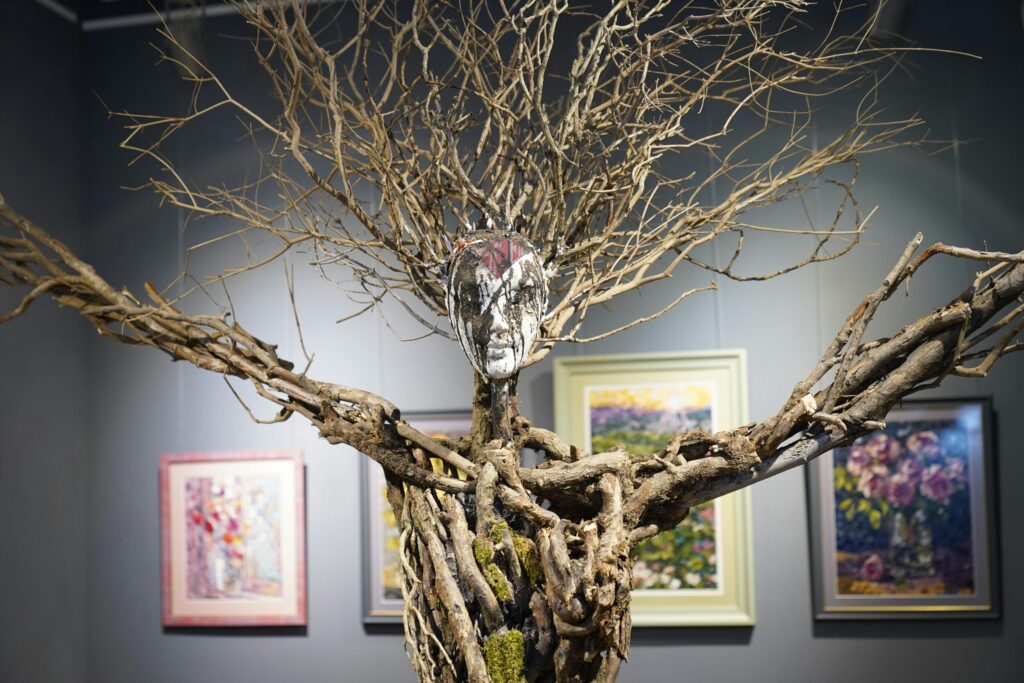
Nature, identity and arts have always been intertwined. New Branches are forming. Photography: Tahir Xalfa
A Borderless Reordering of Cultural Power Has Become the Defining Condition of Our Age.
The globalisation of taste has accelerated this transformation. A collector in Berlin can discover a painter in Seoul before breakfast; a patron in Dubai can support a project in São Paulo without ever leaving the marina. The result is a redistribution of cultural power that is both exhilarating and faintly destabilising. Reputations are built faster, but they are also more fragile. As Leganowska notes, “reputations are still built via connections, but this time globally”.
Korean artists find support through Korean owned galleries in London; Gulf States use oil wealth to import Western art and export their own. The map of influence has become borderless, and old centres like London, New York, and Paris must now share the stage with Doha, Seoul, and Shanghai.
Artists, for their part, are not necessarily tailoring their work to these new patrons; rather, the art education system has already done the tailoring for them. Contemporary art schools, Leganowska notes, have spent decades shifting away from technical mastery toward “meaningful artwork” shaped by critiques of neoliberalism, environmentalism, and identity politics.
We have a developing generation of artists whose work naturally aligns with the values of tech world collectors. It is not pandering; it is synchronicity. The patrons want meaning, and the artists have been trained to supply it.

Art-Spaces Turn to Story as Their Strategy
Galleries, meanwhile, are recalibrating with admirable agility. Exhibitions are centred on subjects that are politically relevant. This is not a trend, but a strategy, a way of remaining relevant to an audience that treats culture as a moral landscape. The visual qualities of a work, Leganowska says, are now “less important than stories. Stories sell”. It is a line that could have been uttered by a Hollywood agent, but it captures the mood precisely. The gallery is no longer a temple, but a narrative engine.
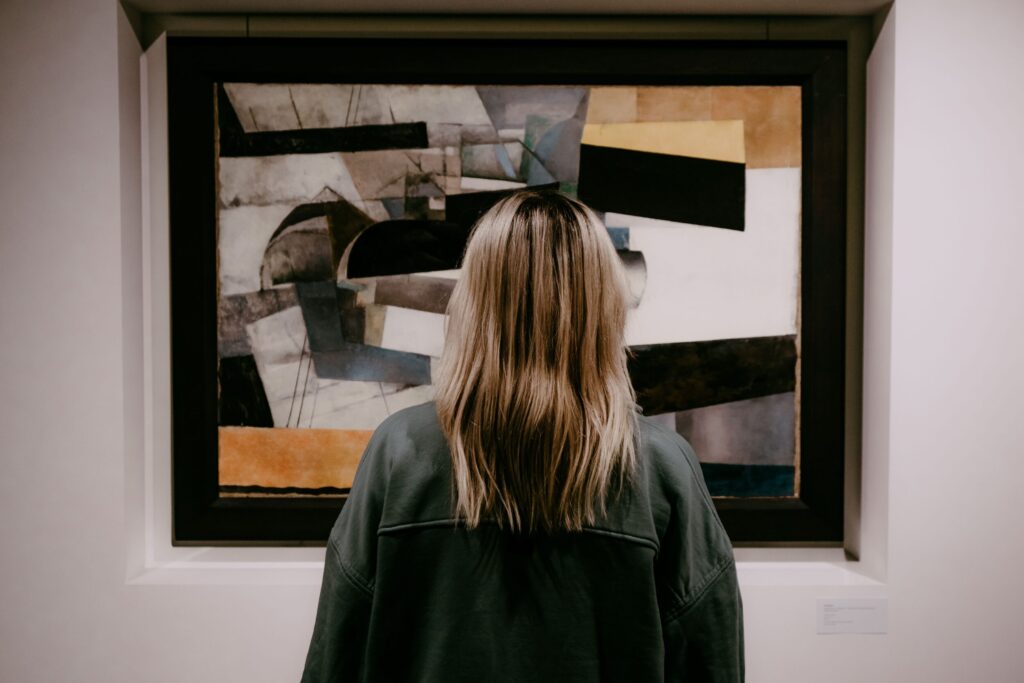
And yet, amid all this velocity, there remains a quiet, vital countercurrent. Pavel, despite her digital fluency, insists that “a photograph or video of a piece rarely gives me enough to form a meaningful connection. Art needs to be encountered physically, through scale, texture, atmosphere”. Julius Lobe, a young collector under twenty five, is even more succinct: “It all comes down to aesthetics”. The simplicity of the remark is almost shocking in an age that demands extensive footnotes for every preference.
It is a rare and welcome clarity. Beneath the global circuitry, the moral posture, and the strategic acquisitions, the essential instinct remains intact. True art does not rely on an explanatory pamphlet; it stands on its own technical brilliance and the timeless, enduring authority of beauty. People still fall in love with objects.
What we are witnessing, then, is not the death of patronage but its reconfiguration. The new patrons are not trying to overthrow the old institutions; they are simply unwilling to wait for them. They collaborate with museums but also bypass them. They support artists directly but still crave the legitimacy of institutional recognition. They move between worlds with a confidence that would have seemed impertinent a generation ago. Their power is quieter than the tycoons of the past, but no less decisive. They understand that taste, properly deployed, is a form of strategy.
The new patrons may lack the stage of old-fashioned grandeur, but they possess the certainty. And certainty, in the realm of culture, certainty remains a formidable force.
Did you enjoy this article? You are invited to vote via the Stars below. Writers receive a reward for 50 or more stars on their article.
Special thanks to the individuals who took part in this Houghton & Mackay article: Marina Leganowska, Lydia Smith, Eliana Pavel, Julius Lobe
Supporting Emerging Talent
Want to give this writer or magazine some extra encouragement?
Support a writer breaking out into the expressive industries by donating. 50% of the donation goes to the writer, whilst the other half is used to build and develop the Magazine, providing even more opportunities for people. You can give a one off token of appreciation for this article, or subscribe monthly from as little as £2.50
© 2026 Houghton & Mackay. All Rights Reserved. The content in this publication may not be reproduced in any form without prior permission to the rights owners. Article topper photo by ICXOD Learn more about Houghton & Mackay on the main Business Website.