
cultivated indulgence has quietly expanded its borders.
a
fresh
standard
By Emily James: Columnist
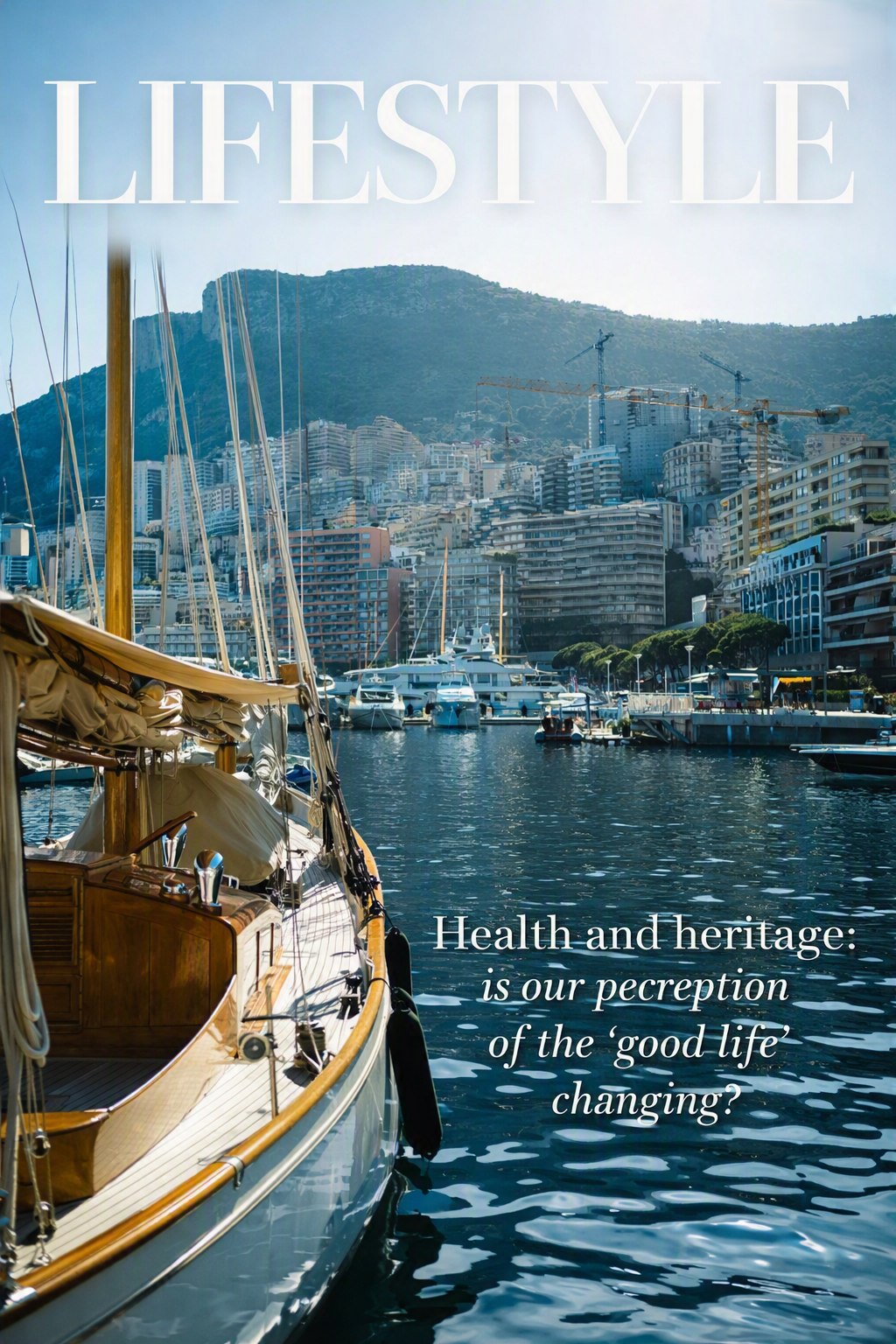
In earlier times, the ideal archetype of the cigar-smoking, well-fed aristocrat was the epitome of status and wealth – a goal worth seeking and aiming for in life. However, times are changing and this image may no longer be the desirable ‘good life’ for us all – Emily Rose explores how trends, goals and lifestyles are changing in our modern era. Read on to find out more…
Money was previously a significant driving point for many – to accumulate as much wealth as possible was the goal of most. No matter what ‘class’ one was part of, money was an end in and of itself. Despite this, the pursuit often came with mental and physical health issues – heart problems, obesity and issues with trusting others. Working life has changed in the last century and more – we no longer need to slave away for hours in a factory to feed a starving family, there is access to the welfare system and it is easier to work one’s way up through a meritocratic type system. Is the class system becoming less prevalent now?
Wealth is still not evenly distributed and much of it lies in the hands of the elite or the top 1% – however, the image associated with this has changed. While wealth does mean better access to private healthcare, higher living standards, memberships of high-end clubs and the ability to eat out luxuriously with ease, it is not the end goal and desired outcome as it may once have been.
Previously, only the wealthy could command the realm of indulgence; today those same refinements have filtered steadily into the lives of the middle and working classes, granting access to pleasures once held firmly out of reach — gym memberships, elegant holidays, polished hotels, and effortless private transport. Luxury has ceased to be a distant trophy wrested through sacrifice; it has become a natural extension of contemporary living. Moreover, social media and technology has enabled greater communication between people from all walks of life, flattening the hierarchy somewhat and creating more equality and access to ‘working one’s way up’ through persistence and hard work.

The way most people understand what money offers has shifted.
Has the traditional class hierarchy begun to lose its hold on contemporary society?
Eva Hoffman, a Polish-American writer, academic, and former editor for The New York Times states: ‘We are, on the whole, more comfortable, healthier and better fed than large masses of people have ever been before. Most of us have access to education and travel and, if we’re so inclined, we can read or go to museums to our hearts’ content.’
In addition, recent changes in these trends could be due to the increase of social media and technology. Many people make money from YouTube (whilst you are here sub to the channel) and social media sponsorships, self-publishing is on the rise as well as e-commerce and private businesses set up by ‘every day’ individuals rather than being solely dominated by the elite. This has a knock-on effect on the way society is distributed and what the ‘ideal’ life looks like.
The image of what constitutes the ‘good life’ is further changing due to a rise in awareness of our impact on the planet. There is a greater focus on nature-based wellness retreats and getaways for instance, and using skin-care products from natural materials. This could be down to the notably growing awareness around caring for the environment and the future of the planet.
Hoffman went on to say, ‘in our globalised, postmodern age, an unprecedented level of choice and knowledge is transforming our understanding of morality.’ Many are favouring a long and healthy life over an overindulgent hedonistic one – there is a growing awareness around diet, exercise and the impact of our choices on the planet and on others.
Are we being less selfish? Are we becoming more virtuous? It may be that due to the increase in amount of spare time we have for pursuing opportunities rather than grinding away, is that we naturally have more capacity to focus on developing aspects of the self such as virtue, caring for others and the planet – the super-rich dream is no longer appealing to us when we can see that our actions have a direct impact on future generations.
Aristotle wrote of the concept of ‘virtue’ and that being a virtuous person is more important than fleeting sensual and hedonistic pleasures. So despite the move away from hedonism becoming more popular, the idea itself has been brewing for thousands of years. It is simply our focus and perception that has changed as a result of circumstance.

Harvard University concluded a study of Adult Development (2023), one of the longest-running longitudinal studies on human wellbeing which explored the very idea that our social relationships are worth more than accumulation of wealth. They discovered that it is more important to have healthy social connection than fame, riches or a high IQ – these being organic connections which move and grow with us – an idea could be that this allows us to talk about our health problems, voice our concerns and externalise many problems which we may magnify if we are left on our own.
However, is there necessarily a ‘trade off’ between the pursuit of wealth and social connections? Rob Dix argues in his book ‘seven myths about money’, that the more wealthy tend to have a wider social network anyway – and this then fuels their wealth through socialising and identifying with others in a similar social strata.
Ultimately, at the root of these conceptions of the ‘good life’, and as Hoffman postulates, is that we are seeking a high degree of freedom. Whether this is the freedom to enjoy a delicious lamb roast on a Sunday morning, devour a bottle of Beaujolais with a Cuban cigar and finish off with a game of golf, or whether we want to have the luxury of a walk in the park on a Tuesday afternoon or a weekend retreat in the Scottish Highlands – the common theme is that we wish to have the choice to do so.
The less we are constrained by external demands, the better – this allows us to explore greater opportunities and expand our liberty. Albeit in our modern era, we seem to be more conscious of the effects of our actions on the environment, others, our wellbeing and health. As Epicurus wrote, ‘it’s not what we have, but what we enjoy, that constitutes our abundance.’
© 2026 Houghton & Mackay. All Rights Reserved. The content in this publication may not be reproduced in any form without prior permission to the rights owners. Learn more about Houghton & Mackay’s main Business Website. Cover Image: Reidy 68.