Where death becomes art?
Stepping beyond an unassuming church and descend into a world where thousands of skeletons line the walls, ceilings and arches, carefully arranged by the very monks whose remains they are. To some, the Capuchin Crypt is unsettling. To others, it is beautiful. Four centuries after its creation, this extraordinary monument continues to challenge our understanding of death, faith and what it means to be remembered.
Sarah Barrett: Columnist (UK)
From the outside, it could be an ordinary museum or church. It contains exhibits about the people who used to inhabit the building, the Capuchin friars, and their way of life. But past the glass cases lies something extraordinary. Go further, and you will suddenly find yourself face to face with the skeletal remains of thousands of Capuchins. Skeletons appear to stare at you from the walls and even from the ceilings. Some are propped up wearing the clothes they would have worn in life. This is the Capuchin Crypt.
What you will see there is an ossuary of very old bones, brown from aging. They date back to at least 1631. The people they belonged to could never have imagined that one day awestruck tourists would capture their images forever with technology beyond their comprehension, and share them all over the world. (Photography was banned in the crypt until very recently – now images of the crypt show up frequently on r/rome.) That being said, seeing a picture of the crypt doesn’t compare to walking through it yourself. It is always crowded and loud, but it’s an experience like no other. Some find it spooky, and some find it spiritual.
It was certainly intended to be spiritual. Every part of the crypt is entwined with Catholic faith. There are images of Jesus, Mary and Lazarus on display with the skeletons, reminding you that these monks believed in the soul living on long after the flesh is gone. They would come and pray here, among the skeletons of their forebears, when the day was done.
The crypt has had many famous people visit over the centuries. The infamous Marquis de Sade wrote that he considered it, “a funerary monument worthy of an English genius.” J. B. de Chatelain was less impressed, calling it “a revolting sight.” Nathaniel Hawthorne devoted a whole chapter of his 1860 book The Marble Faun to the “dead Capuchin” and described the crypt as it still appears today. He, too, viewed it as a horror rather than a peaceful last resting place:
“There is no possibility of describing how ugly and grotesque is the effect, combined with a certain artistic merit, nor how much perverted ingenuity has been shown in this queer way, nor what a multitude of dead monks, through how many hundred years, must have contributed their bony framework to build up these great arches of mortality… Their skulls (some quite bare, and others still covered with yellow skin, and hair that has known the earth-damps) look out from beneath their hoods, grinning hideously repulsive. One reverend father has his mouth wide open, as if he had died in the midst of a howl of terror and remorse, which perhaps is even now screeching through eternity.”
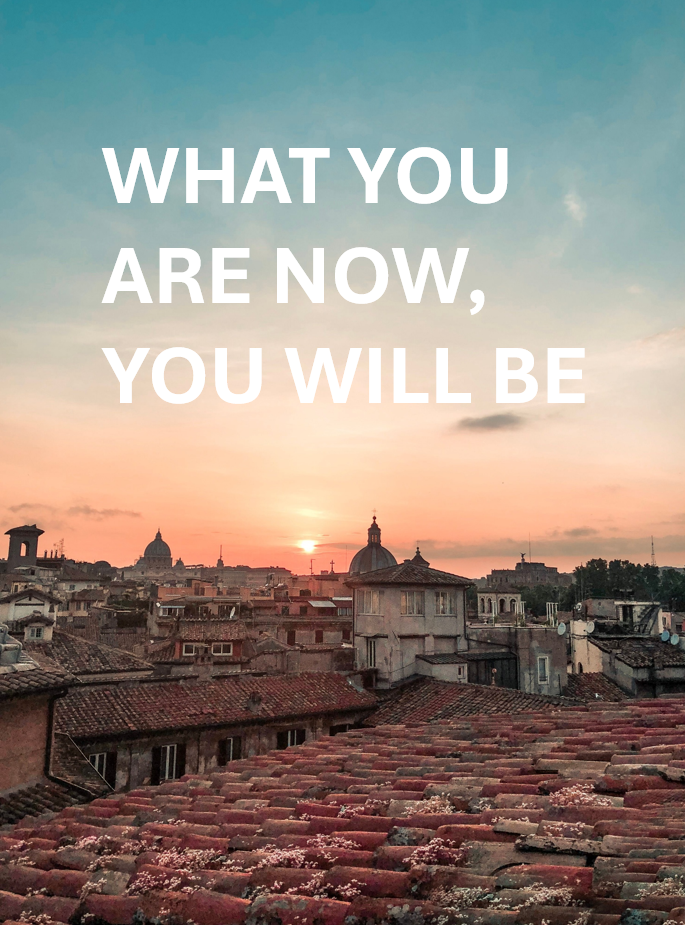
The crypt’s official website tells a different story. It describes the ossuary as a “memento mori of art and spirituality.” In other words, it’s a reminder that everyone’s time on earth is fleeting. A sign in front the skeletons greets visitors with the words, “What you are now we used to be; what we are now you will be.” In other words, better get used to death – there’s no cheating it.
The Crypt: Contains the skeletal remains of roughly 3,700 Capuchin friars, arranged in elaborate, artistic decorative patterns across several tiny chapels
The concept of the ossuary has had a bit of a pop culture moment recently with the 28 Years Later infection-zombie franchise. One of the central locations of the two recent films is “the bone temple”, constructed by Ralph Fiennes’ character out of the bones of zombies and their victims. He explains, “Every skull is a set of thoughts. These sockets saw, and these jaws spoke and swallowed. This is a monument to them.” But when other characters see the towers of bones, they think it’s Satanic.
When pictures of the Capuchin crypt show up on Reddit or other social media sites, this kind of imagery is occasionally in the comments section too. The concept of bones on display = devilish work is a hard one to shake. But the old Capuchins were certainly nothing to do with the Devil (their order still exists today actually – they are not high in number but they’re absolutely out there) and their work was to honor each other and God. And their work didn’t stop in Rome either.
The Capuchins also maintained a catacomb in Sicily and this is just as remarkable. To some families in the area, it was considered an honour to be entombed there. Some of the corpses were preserved so they appeared to be almost alive, and allegedly the families of the deceased would visit the corpses and hold their hands for prayer.
It sounds extraordinary to us – but is it really that much different to the service offered by modern-day hospitals and funeral homes, where dead bodies are preserved for a time to allow loved ones to say goodbye?
The work of the Capuchins has inspired other people. In Poland in the eighteenth century, one Father Wacław Tomaszek built a “skull chapel” from the dead buried in mass graves after plagues and conflicts. Like the fictional “bone temple” in 28 Years Later, this one serves as a memorial as well. A message outside the chapel reads, “To the victims of wars in remembrance, and as a warning to the living.” What could be a better warning than thousands of skulls?
It’s often been said of modern humans that we don’t view death in the same way our ancestors did. To a lot of us, everything between the hospital and the funeral happens behind closed doors. And then there’s the fact that it’s simply safer to be a human than it ever has been. So many diseases have been cured. But to the Capuchin monks of 1631, life and death was very different: shorter, harder, closer. Perhaps they never even imagined their memorial would survive into 2026 – but it did, and though it’s certainly polarizing it does exactly what it was intended to do: make the viewer consider what they will inevitably be one day.
Visit Sarah’s profile to read her other articles.
© 2026 Houghton & Mackay. All Rights Reserved. The content in this publication may not be reproduced in any form without prior permission to the rights owners. Top Photo: Alexandra Gorn. Prose: Sarah Barratt